
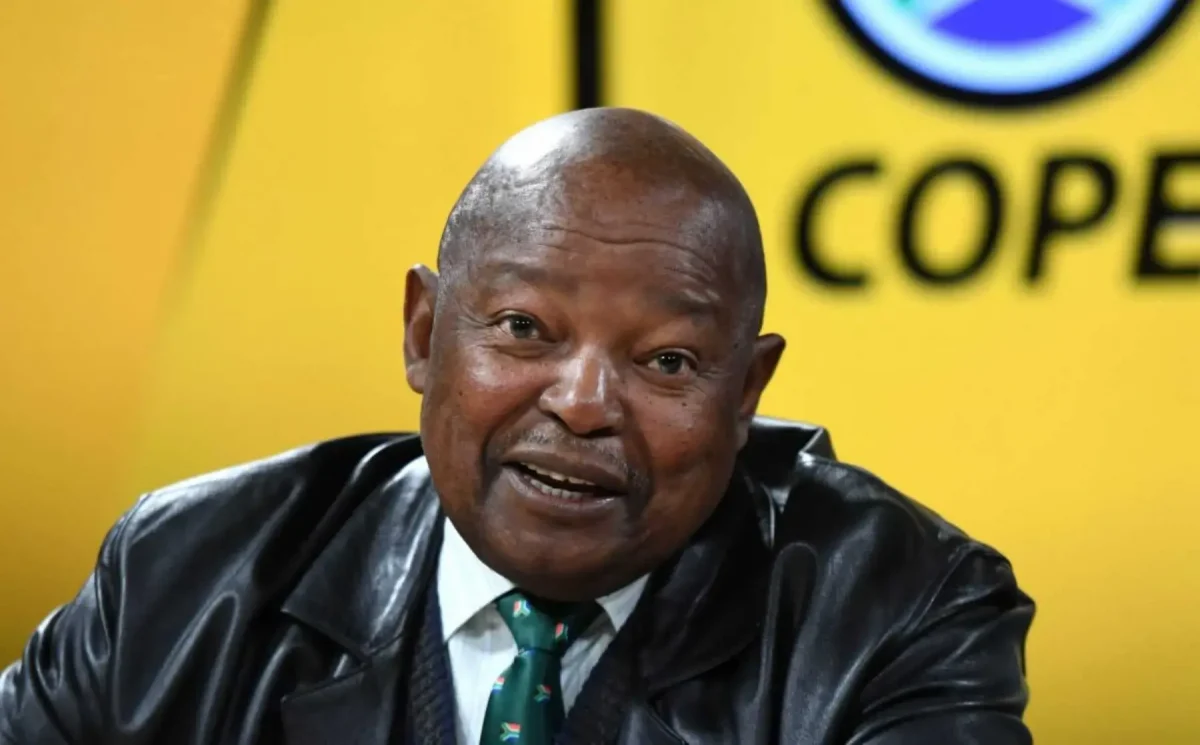
South Africa lost one of its veteran political figures when Mosiuoa Lekota passed away on 4 March 2026 at the age of 77. Known for his role in the anti-apartheid struggle, his leadership in government, and his later founding of the Congress of the People, Lekota played a significant part in the country’s modern political history.
From being imprisoned on Robben Island to serving in the cabinet of Thabo Mbeki, Lekota’s journey reflects decades of activism, leadership, and political influence.
Here are 31 key facts about Mosiuoa Lekota that highlight his life, career, and legacy.
1. His Full Name
His full name was Mosiuoa Gerard Patrick Lekota.
2. Born in the Free State
Lekota was born on 13 August 1948 in Kroonstad.
3. A Veteran of the Anti-Apartheid Struggle
He was deeply involved in the fight against apartheid as a member of the African National Congress.
4. Known as “Terror Lekota”
His famous nickname “Terror” came from his fearless playing style on the soccer field.
5. Early Education
He attended Susanna Farm School for his primary education.
6. High School Studies
Lekota studied at Mariazell High School in Matatiele.
7. Completed Matric in 1969
He matriculated from St. Francis College in Mariannhill.
8. Expelled from University
He studied at the University of the North, but was expelled due to political activism.
9. Member of SASO
He was active in the South African Students’ Organisation, linked to the Black Consciousness Movement.
10. Became a SASO Organizer
In 1974, Lekota became a permanent organizer for SASO.
11. Imprisoned on Robben Island
He was jailed in 1974 on Robben Island for political activities.
12. Celebrated Mozambique’s Independence
His arrest followed rallies celebrating the independence of Mozambique.
13. Released After Eight Years
Lekota was released from prison in 1982.
14. United Democratic Front Leader
He became publicity secretary of the United Democratic Front in 1983.
15. Key Figure in the Delmas Treason Trial
He was one of the accused in the Delmas Treason Trial.
16. Detained Again in 1985
Lekota was detained and sentenced during the trial but later released.
17. Freed in 1989
The Appeal Court overturned the convictions in the Delmas Treason Trial.
18. Senior ANC Leader
After the unbanning of the ANC, he became an important figure within the party.
19. ANC Intelligence Chief
In 1991, he served as the ANC’s Chief of Intelligence.
20. ANC National Executive Committee Member
He was elected to the ANC National Executive Committee (NEC).
21. First Premier of the Free State
After the 1994 South African general election, Lekota became the first Premier of the Free State.
22. Served as Premier (1994–1996)
He governed the province during the early years of democracy.
23. First Chairperson of the NCOP
He became the first chairperson of the National Council of Provinces.
24. Minister of Defence
From 1999 to 2008, he served as South Africa’s Minister of Defence.
25. Served Under President Thabo Mbeki
His defence leadership was during the presidency of Thabo Mbeki.
26. National Chairperson of the ANC
Lekota served as ANC National Chairperson from 1997 to 2007.
27. Resigned from Cabinet in 2008
He resigned following the political crisis that led to the resignation of Thabo Mbeki.
28. Founded a New Political Party
In 2008, Lekota helped form the Congress of the People (COPE).
29. First President of COPE
He became the party’s first president on 16 December 2008.
30. COPE’s Declining Support
The party initially won 30 seats in Parliament in 2009, but its support later declined.
31. His Death in 2026
Mosiuoa Lekota died on 4 March 2026 in Johannesburg, leaving behind a long legacy in South African politics.
Legacy of Mosiuoa Lekota
Mosiuoa Lekota’s political journey spanned the anti-apartheid struggle, the birth of democracy, and the challenges of modern South African politics. From sharing prison time with leaders such as Nelson Mandela to leading his own political movement, Lekota remained a significant voice in the country’s democratic story.
His life reflects the transformation of South Africa from apartheid to democracy and the ongoing debates about governance, accountability, and leadership.